The Beginner's Ear: What Teaching a First Music Class Gave Back to My Own Songs
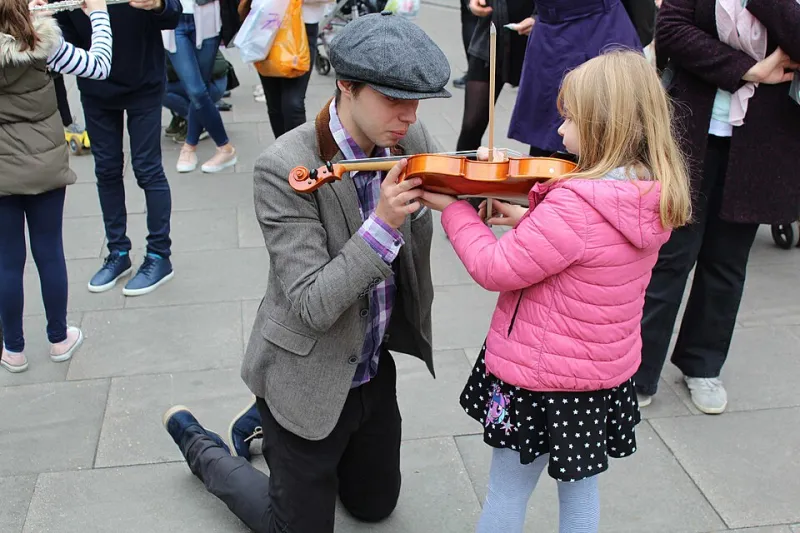
Photo: Petru Cotarcea, CC BY-SA 4.0, via Wikimedia Commons
In September I taught a six-week beginner music class at a community center in Queens. Seven adults, one borrowed keyboard, a stack of plastic buckets, and a whiteboard that squeaked. I had taught before, but never absolute beginners. Most of them had never sung in front of another person. One woman told me she had been told in third grade that she was tone-deaf and had believed it for forty years.
I thought I was there to teach them about rhythm and pitch. I was also there to hear my own assumptions out loud.
The Room Had Never Clapped on Beat
The first night, I asked everyone to clap along to a simple pulse. It was a disaster in the most beautiful way. Some people clapped twice as fast. Some clapped once and then looked around. One man clapped with his arms crossed over his chest, like he was trying to be polite to the beat without committing to it.
I had planned to move on to quarter notes. I threw out the plan. We spent forty minutes just walking around the room and clapping on the step. By the end, most of them could do it. Not all of them. But the room had changed. There was laughter instead of shame.
I went home that night and listened to a demo I had been stuck on for weeks. I heard something I had not heard before: I had been rushing the bridge because I was afraid the listener would get bored. I had been adding layers to cover a feeling I did not trust. The beginners had reminded me that the beat is not a test. It is a place to stand.
My Assumptions Got a Microphone
When you explain something to a beginner, you find out how many shortcuts you have been taking. I tried to explain why a major chord sounds happy and a minor chord sounds sad, and I heard myself say, Well, it just does. That is not an explanation. That is a shrug in a trench coat.
So I went back and actually thought about it. I thought about intervals and cultural conditioning and the way a minor third can feel like longing in one song and like menace in another. I thought about how much of my own writing relies on muscle memory I have never examined. The class did not just learn from me. I learned from the holes in what I could explain.
Slow Is a Skill I Had Forgotten
I have been making music for a long time. I can hear a mistake in my own playing and fix it without thinking. That is useful, but it is also a kind of speed that hides the mechanics. The beginners could not hide anything. They had to slow down to the speed of learning, and I had to slow down with them.
We spent a whole session on the difference between playing softly and playing quietly. We spent another session on listening to the room instead of listening to yourself. These are basic things. They are also things I had stopped noticing in my own practice. I had been chasing the feeling of a finished song without staying long enough in the unfinished part.
The Song I Had Been Hearing Wrong
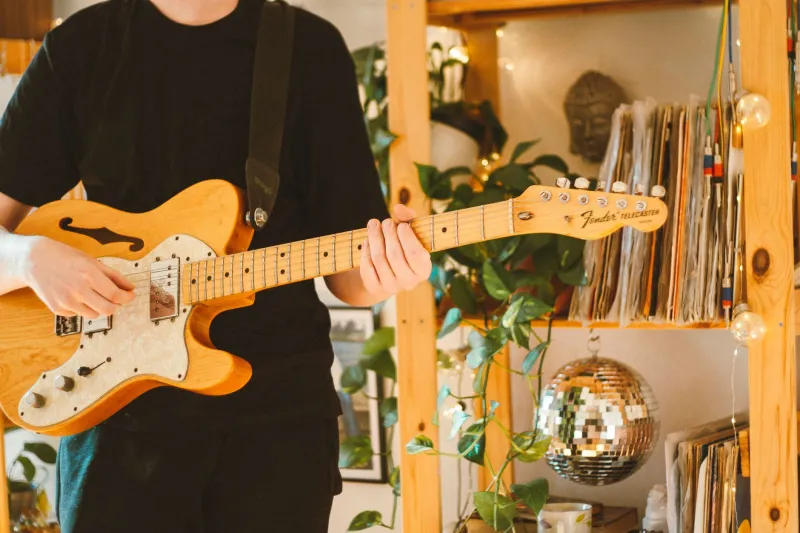
Halfway through the class, I brought in one of my own songs. Not to perform it, but to take it apart. I played the first verse and asked them what they heard. Someone said it sounded like a person trying not to wake someone else up. Someone else said the guitar sounded like it was in a hurry even though the voice was not.
I had never thought of it that way. I had written the guitar part to be steady. But what I heard as steady, they heard as tense. That was not a criticism. It was information. I went home and re-recorded the part with more space. The song got quieter and, somehow, bigger.
What I Bring Back to the Studio
I am not going to pretend that teaching made me a better person. It made me a more curious listener. It made me less afraid of explaining myself badly, because explaining yourself badly is often the first step toward explaining yourself clearly. It made me remember that the thing I love about music is not that I am good at it. It is that it is a shared language, and sharing it means being willing to be a beginner again.
The class ended with a small concert in the same room. They played the buckets. They sang a two-chord song we wrote together. One woman — the one who had been told she was tone-deaf — sang a solo. She was not perfect. She was present. The room went quiet in the way rooms do when something true is happening.
I went home and opened a new file on my laptop. I did not write anything good. I just listened to the room in my head. The beginners had given me back my own ear. I am still using it.