What Nobody Asked For Turned Out to Be the Most Honest Thing I've Made
I made a thing last spring that had no reason to exist.
There was no client. No deadline. No pitch deck, no audience expectation, no platform that had requested it. Nobody was waiting. Nobody had asked. I just had this idea that wouldn't leave me alone, a block of time I'd somehow protected from all my other obligations, and a weird, low-stakes energy that comes from knowing absolutely no one is watching.
I made it anyway. And it turned out to be the most purely me thing I've made in years.
The Brief That Frees You
Most creative work — at least the kind that gets shared, the kind that builds careers — starts with some version of a brief. Someone wants something. An audience has a need. A platform has a format. A collaborator has a vision. Even when you're working independently, you're usually working in response to something: a trend, a gap, a reaction to what you've already put out.
There's nothing wrong with that. Responsive work is real work. But it carries a weight that you stop noticing after a while, the same way you stop noticing background noise until it suddenly goes quiet.
When you make something that nobody asked for, that weight disappears. And what's left — the work you make in that absence of expectation — has a quality to it that's almost impossible to manufacture intentionally.
I've started calling it the unsolicited project. And I think every creative person needs one running at all times.
What Actually Happened When I Made Mine
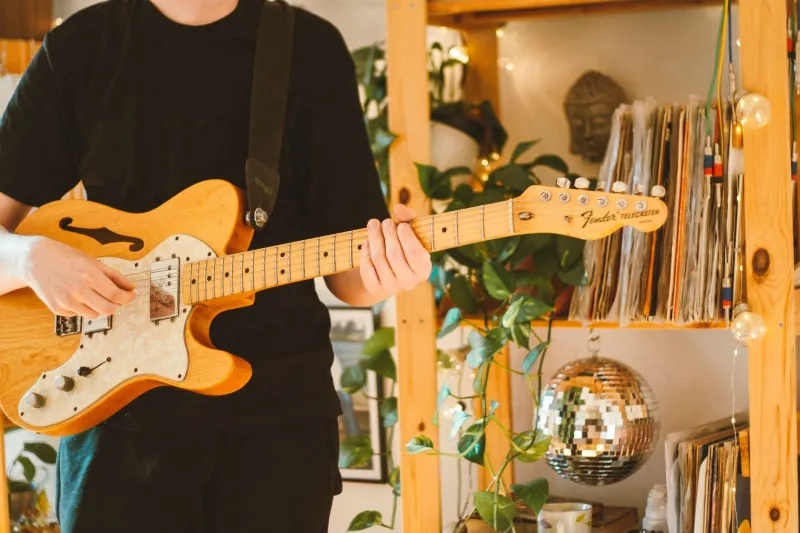
The thing I made last spring was a series of short audio pieces — not quite songs, not quite spoken word, somewhere in between. Atmospheric, strange, personal in a way that felt almost embarrassing. I recorded them in my apartment on gear I already owned. I didn't tell anyone I was working on them.
When I finished, I sat with them for about two weeks trying to figure out what to do. They didn't fit neatly into anything I'd shared before. They weren't going to perform well by any metric I was used to tracking. They were just... honest. More honest than almost anything I'd put out.
I shared them quietly. No launch, no announcement, no strategy. Just posted them and moved on.
The response was small but unusually specific. People reached out not to say "great work" in that polite, general way — they reached out to say this is exactly what I needed to hear and how did you know and I've been trying to make something like this for years. A few artists I really admire got in touch. One of those conversations turned into a collaboration I'm still excited about.
None of that would have happened if I'd tried to engineer it. The work found its people precisely because I hadn't aimed it at anyone.
Why Unsolicited Work Reveals Your Actual Voice
Here's what I think is happening when you make something without a brief: you stop filtering.
Most of the time, even when we think we're making free creative choices, we're running an invisible filter. Will this land? Is this too weird? Does this fit what people know me for? Is this too personal, too niche, too different from what I usually do? The filter isn't always conscious, but it's almost always running.
When there's no audience to aim at, the filter loses its reference point. There's nothing to optimize for, so you stop optimizing. You make the thing that actually interests you, in the way that actually makes sense to you, without the constant translation process of converting your instincts into something legible to an assumed audience.
The result is almost always more specific, more unusual, and more genuinely expressive than the work you make with an audience in mind. And paradoxically, that specificity is what makes it connect. People don't respond to work that was made for everyone — they respond to work that was clearly made by someone, fully and without apology.
The Attention Paradox
This is the part that still kind of blows my mind: the work I made for nobody has brought me more of the right attention than a lot of work I made with visibility in mind.
I don't think that's a coincidence, and I don't think it's magic. I think it's because people can feel the difference between work made to be seen and work made because it had to exist. The first kind triggers a mild, scrollable response. The second kind stops people.
When you make something without concern for its reception, that unconcern becomes audible. Visible. It's in the choices you made that don't quite follow the formula, the moments where you went left when convention says go right, the texture of something that was never run through an approval process — not even your own internal one.
That texture is what people are actually hungry for. They just don't always know how to ask for it, which is why they never commissioned it from you in the first place.
How to Actually Give Yourself This Space
I know the obvious objection: who has time for projects that don't have an immediate purpose? If you're building a career, every hour matters, and making things for nobody feels like a luxury.
I'd push back on that framing a little. The unsolicited project doesn't have to be large. It doesn't have to take months. It just has to be genuinely free of external obligation — something you're making because you want to, with no plan attached.
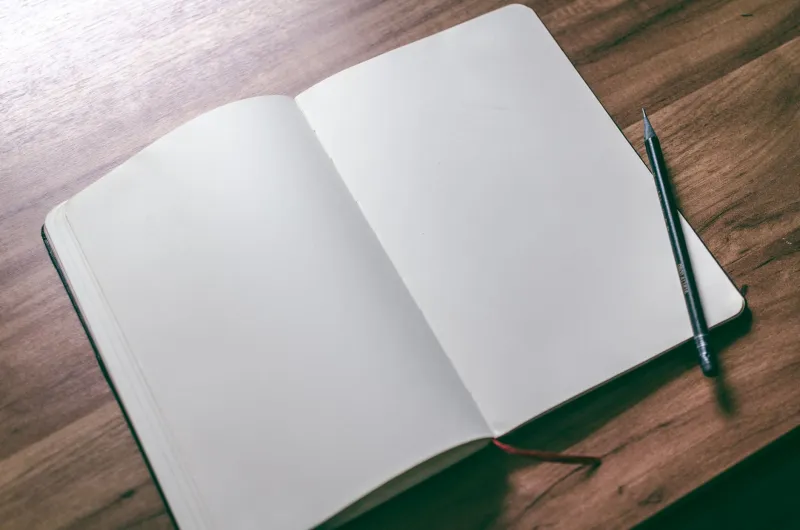
For me, it helps to keep it separate from everything else. Different notebook. Different folder on my computer. No mentions in my content calendar. The separation keeps it clean — it stays free of the gravity that pulls everything else toward audience and strategy.
I also try to resist the urge to decide what it is while I'm making it. The unsolicited project is allowed to be unclassifiable. It's allowed to be weird. It doesn't have to have a home before it's finished. In fact, it's better if it doesn't — the search for a home is where the filtering starts.
Make the Thing That Doesn't Have a Slot Yet
If you've been waiting for someone to ask for the strange, specific, uncategorizable thing you actually want to make — stop waiting. Nobody's going to ask for it, because they don't know it exists yet. That's the whole point.
Make it without asking permission. Make it without a platform in mind. Make it for the version of yourself that became an artist in the first place, before the metrics and the strategy and the audience psychology.
The work you make when nobody's asking for it might be the most important work you ever do. Not because it'll necessarily be the most successful — though it might surprise you — but because it's the work that reminds you who you actually are when you're not performing for anyone.
And that reminder? It changes everything you make after.