The Grocery Store Conversation That Became a Song (And Other Weird Origin Stories)
People always ask where ideas come from. It's one of those questions that sounds simple and is actually kind of impossible to answer — at least honestly. Because the honest answer is usually something like: "A woman at the grocery store said something to her kid that I couldn't stop thinking about for three weeks, and then it was a song."
That's not the glamorous origin story anyone's expecting. But it's real. And once I started paying attention to how my actual creative process works — as opposed to how I imagined a serious artist's process should work — everything got a lot more interesting.
The Checkout Line Incident
Here's the story. I was at a Trader Joe's in the middle of a Wednesday afternoon, which is already the most anonymous, low-stakes version of existing in public. The line was long. I was tired. I was definitely not in "creative mode," whatever that even means.
The woman in front of me was wrangling a cart and a kid who looked about six years old and deeply unimpressed with the whole grocery situation. The kid pointed at something on the shelf — a display of those little succulent plants they always have near the register — and said, "Those ones are still trying."
The mom laughed. I laughed. We all moved on with our lives.
Except I couldn't move on. "Those ones are still trying." I kept turning that sentence over in my head on the drive home. There was something in it — the way a kid sees persistence in a plant that's surviving in a little plastic pot, the way that observation was both completely literal and accidentally profound. By the time I got home, I had the bones of a melody. By the end of the week, I had a full piece built around that one line.
I never would have found that sitting at a desk trying to write something meaningful about resilience.
A Phone Call I Wasn't Supposed to Hear
Another one. I was working in a coffee shop — one of those independent places with exposed brick and too many people on laptops, myself included. The guy at the table next to me was on a phone call, trying to keep his voice down and mostly failing.
I wasn't eavesdropping on purpose. But I caught fragments: "...I just don't know how to be the version of myself that she remembers..." And then a long pause. And then, quietly: "Yeah. I know. I know."
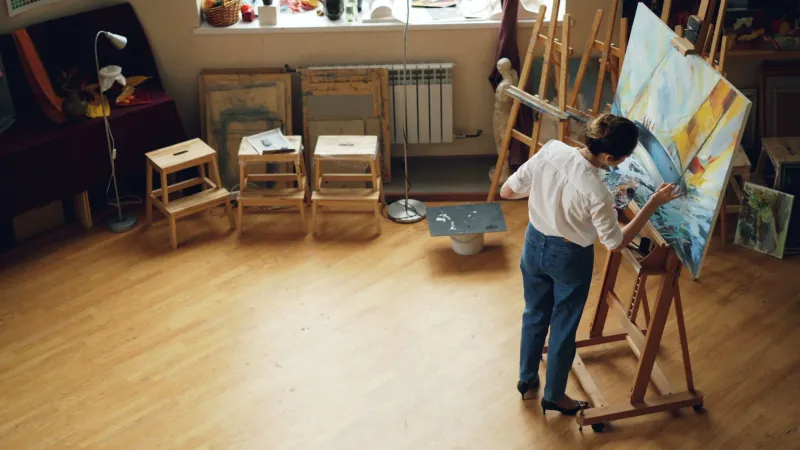
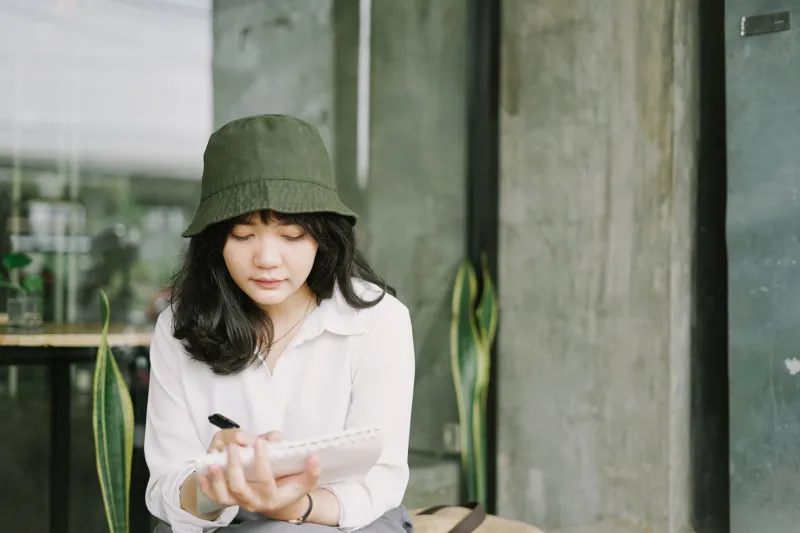
I don't know who he was talking to. I don't know the context. I closed my laptop, pulled out my sketchbook, and started drawing — not him, but the feeling of that sentence. The idea of being haunted by a version of yourself that someone else is still holding onto.
That sketch became the starting point for a series of visual pieces I worked on for months. The whole series is about memory and identity and the gap between who we are and who people think we are. None of that would exist without a stranger's half-heard phone call in a coffee shop in the middle of a Tuesday.
The Window Thing
This one's smaller, but it stuck with me.
I'd left a window open one night when it was still technically cold outside — that early spring moment in the Northeast when the air can't decide what season it wants to be. In the middle of the night, the wind came through and knocked a stack of papers off my desk. I got up to close the window and stood there for a minute in the dark, listening.
The neighborhood was quiet in that specific 3 a.m. way — not silent, but stripped down to its essential sounds. A car somewhere. Something metal moving in the wind. The particular quality of cold air that smells like it's been traveling a long time to get to you.
I stood there probably five minutes. Then I went back to bed. But that feeling — that specific texture of being awake in the world while most of it is asleep — ended up woven into a piece of music I made a few months later. I wasn't trying to capture it. It just came through.
What I've Figured Out About Paying Attention
The pattern I keep noticing is this: the moments that feed my best work are almost always moments when I'm not trying to be creative. They happen when I'm just existing — tired, distracted, running errands, half-asleep. The creative brain doesn't clock out. It keeps running in the background, flagging things, filing them away.
The trick — if there is one — is learning to trust that process instead of fighting it.
I used to feel guilty about the days when I wasn't producing anything. Like I was failing at being an artist. Now I understand those days differently. The grocery store trip is research. The overheard conversation is source material. The window left open at 3 a.m. is a studio session, just not the kind that shows up on a schedule.
Some practical things that have helped me:
- Keeping a notes app entry (or a small notebook) specifically for fragments — half-sentences, images, moments — with zero pressure to do anything with them immediately
- Giving myself permission to be bad at separating "regular life" from "creative life," because they're honestly the same thing
- Writing down why something caught my attention, not just what it was — the "why" is usually where the real material lives
- Revisiting old fragments when I'm stuck — something that seemed random six months ago will often suddenly make sense in the context of what I'm working on now
The best stuff I've made didn't start with a brief or a concept or a clear intention. It started with a kid pointing at a plant and saying exactly the right thing at exactly the right moment. You just have to be in the checkout line, paying attention.