Three Times I Burned It All Down and Built Something Better
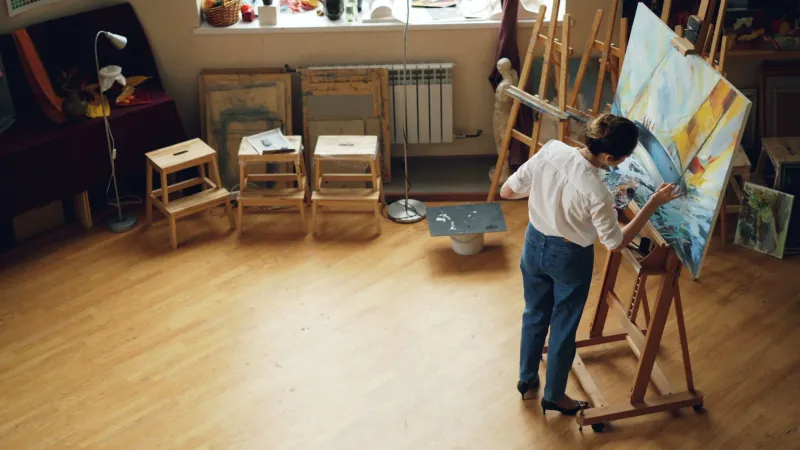
There's a particular kind of dread that comes with realizing you've gotten really good at something you no longer care about. It's not dramatic. It doesn't announce itself with a thunderclap. It just sort of... settles in, quietly, like dust on a shelf you forgot to check. That's how each of my creative reinventions started — not with a bold declaration, but with a slow, creeping restlessness I couldn't shake.
I've pivoted my artistic direction three times now. Each one felt terrifying in the moment. Each one was absolutely necessary. And each one taught me something I couldn't have learned any other way.
The First Pivot: Letting Go of "Serious" Art
When I first started taking my creative work seriously, I was deep in the world of traditional visual art — detailed, technically demanding work that I'd spent years learning to produce. I was proud of it. People responded to it. And somewhere around year three, I started dreading my own studio time.
The work had become about proving something. Proving I was skilled, proving I was disciplined, proving I belonged in spaces that hadn't always felt welcoming. And when your work becomes about proving instead of exploring, the joy drains out of it fast.
The pivot came when I started doodling in the margins of my sketchbooks — loose, playful, almost embarrassingly simple drawings that I never intended anyone to see. A friend caught a glimpse of one and said, "This is you. This is actually you." I didn't know what to do with that. I filed it away. Then I pulled it back out about six months later, when the dread got loud enough that I couldn't ignore it anymore.
Shifting toward a more expressive, less technically rigid style felt like betraying everything I'd worked for. What I actually found was that the technical foundation I'd built made my looser work richer — there was structure underneath the freedom, even when you couldn't see it. The fear of "throwing away" my training was completely unfounded. You don't lose what you've learned. You just stop being a prisoner to it.
The Second Pivot: Music Wasn't a Hobby Anymore
I'd been making music on the side for years — the kind of "side" that takes up way more of your mental space than anything that's supposed to be secondary. I'd tell people I was a visual artist who "messed around with music," and that framing started to feel dishonest.
The second reinvention was less about abandoning something and more about admitting something. Admitting that music wasn't a hobby. That it was part of the same creative conversation I was having with myself, just in a different language.
This pivot was scary in a different way. With visual art, I had credentials, a portfolio, years of work to point to. With music, I felt exposed — like I was showing up to a party I hadn't been invited to. Imposter syndrome doesn't care how long you've been creating. It just changes its costume depending on the room you're walking into.
What got me through it was deciding to stop treating my creative disciplines as separate departments. They weren't. The same instincts that drove my visual work — the attention to texture, the obsession with negative space, the way emotion lives in what you don't say — were alive in my music too. Recognizing that connection made both practices stronger. It also made me a lot more honest in how I talked about what I do.
The Third Pivot: Writing Was Always Part of This
The most recent shift was the one I resisted the longest: accepting that storytelling — actual written narrative — was just as central to my creative identity as the visual and musical work.
I'd been writing for years. Notes, journals, captions that turned into essays, little pieces of prose tucked into the corners of projects that were technically "about" something else. I kept treating writing like scaffolding — useful for building the real thing, but not the real thing itself.
Then I started sharing some of those written pieces more openly, and the response genuinely surprised me. People weren't just responding to the stories — they were telling me the writing helped them understand my other work differently. It gave context, yes, but more than that, it gave permission. Permission to feel things about art and music that they hadn't known how to articulate.
That was the moment I stopped apologizing for being a person who works in multiple mediums.
What Three Reinventions Actually Teach You
If you're standing at a creative crossroads right now — feeling that restless, dusty-shelf feeling — here's what I can tell you from the other side of three of them:
Your old work doesn't disappear. Every skill you've built, every hour you've put in, it compounds. It doesn't evaporate because you changed direction. It shows up in unexpected ways in everything you do next.
The fear is information, not a stop sign. Every single pivot I made was accompanied by genuine fear. Not caution — actual fear. That fear was pointing directly at the thing that mattered most. Pay attention to it.
The people who get it will find you. Every time I shifted, I worried about losing my audience. Every time, I ended up finding a deeper connection with the people who stuck around — and meeting new people who resonated with the more honest version of my work.
Reinvention isn't starting over. It's more like renovation. You're not tearing the whole thing down. You're finally making it livable.
I don't know what the fourth pivot will look like. I'm sure there will be one. And I'm sure it will scare me, and I'll do it anyway, and it'll turn out to be the right call. That's kind of the whole deal.