The Offhand Comment That Quietly Rewired How I Make Everything

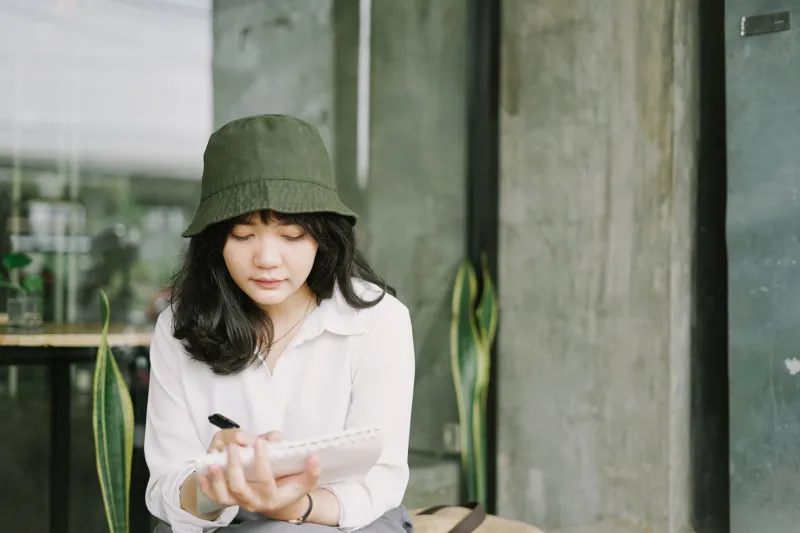
Photo by Photo by Soheil Kmp on Unsplash on Unsplash
I want to tell you about a Tuesday afternoon in a coffee shop in Brooklyn, about three years ago. Nothing dramatic happened. There was no lightning bolt, no tearful breakthrough, no moment I'd photograph and post with a long caption about transformation. I ordered an oat milk latte, sat across from someone I'd met maybe twice, and said something I'd said a hundred times before — and her response changed, quietly and permanently, how I approach everything I make.
I know that sounds like I'm building up to something huge. I'm not. That's kind of the whole point.
The Setup
I'd been in a weird creative rut for a few months. Not a total block — I was still producing work, still showing up — but everything felt effortful in a way that was starting to feel less like healthy struggle and more like something was fundamentally off. I kept finishing things and feeling vaguely disappointed, like I'd been aiming at a target I couldn't quite see.
A mutual friend had connected me with this woman — I'll call her M — who was a textile artist based in Brooklyn. We weren't in the same discipline at all, which is probably why the conversation went the way it did. There was no professional overlap to be careful around, no competition, no reputation management. Just two people talking about making things.
At some point I said the thing I always said when people asked how a project was going: "I'm just trying to figure out what people actually want from it."
I'd said some version of that sentence so many times it had stopped meaning anything to me. It was just the thing you said.
M put her coffee down and looked at me with this expression that wasn't unkind but was definitely direct. She said, "Do you actually want to know what people want, or do you want permission to make the thing you already know you want to make?"
And then we kept talking about something else entirely.
The Comment I Couldn't Put Down
She didn't make a big deal of it. I don't even think she knew she'd said something significant. But I drove home with that question rattling around in my head, and it did not stop rattling for weeks.
Because the honest answer — the one I didn't say out loud in the coffee shop — was: the second one. Obviously the second one. I already knew what I wanted to make. I'd known for a while. I was just waiting for some external signal that it was okay to make it. Some evidence that an audience existed for it, some validation that it was worth the time, some green light from a source I couldn't even name.
I'd been framing my own creative paralysis as research. As audience-awareness. As professionalism, even. And what it actually was, was fear dressed up in strategic language.
The Permission We Don't Know We're Waiting For
I think a lot of creative people do this. We ask "what does the audience want" when what we really mean is "is it safe to want what I want." We study the market when we're actually just stalling. We call it strategy when it's really self-protection.
The tricky part is that none of it is conscious, at least not at first. You genuinely believe you're being thoughtful and intentional. The research feels productive. The consideration feels responsible. It's only when someone outside your own head reflects it back to you — in one unguarded, throwaway sentence — that you can see it for what it is.
M wasn't trying to be my life coach. She wasn't delivering a lesson. She just said the true thing because she didn't have any reason not to.
That's the version of feedback that actually changes you. Not the formal critique session, not the mentor's carefully constructed notes — the offhand observation from someone with no stake in your answer.
What Changed in Practice
After that conversation, I made one small but concrete shift in how I start projects. Before I open a blank document or pick up an instrument or start sketching, I ask myself one question: What do I actually want this to be?
Not what should it be. Not what would make it more shareable. Not what gap in the market does it fill. Just — what do I want?
I write the answer down. Sometimes it's one sentence. Sometimes it's a messy paragraph. But I write it before I do anything else, and I keep it somewhere visible while I'm working.
It sounds almost embarrassingly simple. But it has functionally ended the particular kind of drift I was experiencing — that sense of aiming at a target I couldn't see. The target, it turns out, was there the whole time. I just kept looking somewhere else for it.
The Quiet Pivots Are the Ones That Last
I've had moments in my creative life that felt bigger — workshops that cracked something open, performances that shifted how I understood what I was capable of, relationships that changed the direction of my work entirely. Those are real and I'm grateful for all of them.
But this Tuesday-afternoon conversation with someone I barely knew, over a coffee I barely remember finishing, might be the one that's had the most durable effect on how I actually work day to day. Because it didn't tell me anything new. It just named something I'd been avoiding, in a way I couldn't unhear.
That's the thing about the quiet pivots: they don't announce themselves. They don't look like transformation while they're happening. You only recognize them later, when you realize you've been doing something differently — and better — for longer than you can pinpoint.
Pay attention to the throwaway comments. Sometimes that's where the real permission lives.