The Receipt in My Pocket Is Part of the Song

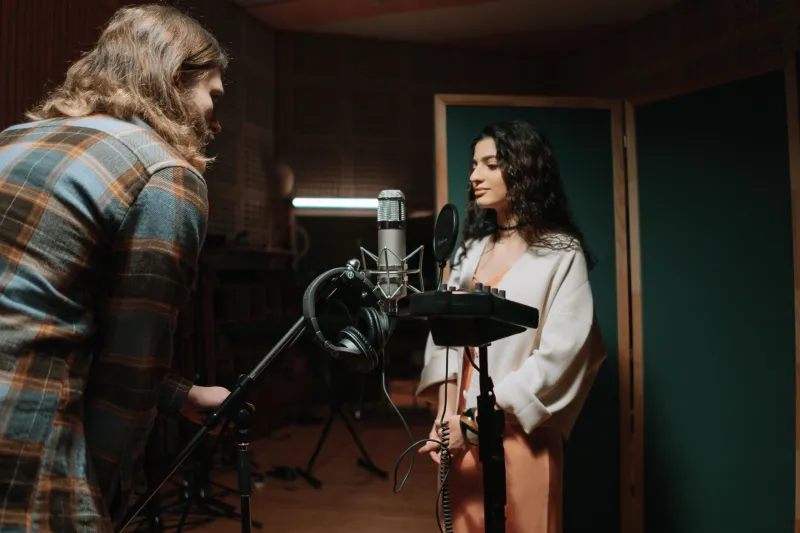
Photo by Photo by Madeline Liu on Unsplash on Unsplash
The Tuesday Shift
I clock in at 7:45 on a Tuesday, and the first thing I do is check the voice mail. I work the front desk at a small dental office in New Jersey. The job has nothing to do with music. It has everything to do with my music. For a long time I would have said that sentence with an apology attached, like I was confessing to a weakness. Now I say it the way I would describe a good amp: it is part of the rig.
The receipt happened on a slow afternoon. A patient paid for a cleaning, and the card machine spat out a thin strip of paper. I folded it, put it in my pocket, and forgot about it until I was on the bus. Somewhere around exit 14 I pulled it out and wrote a line on the back: I keep the lights on for a song nobody knows yet. That line became the bridge of a song I finished two months later. The song did not pay for the lights. The lights helped pay for the song.
The Confession I Stopped Making
For years I treated survival work as a confession. I would meet another artist at a bar and wait for the question. What do you do? I would lead with the creative thing, then slide in the day job like a disclaimer. I was afraid that if people knew I spent forty hours a week answering phones, they would hear my work differently. Maybe they would hear it as a hobby. Maybe I would hear it that way too.
The shift came when I stopped asking every song to be a paycheck. When rent is covered, I can say no to a bad brand deal. I can turn down a gig that wants three hours of my time for free. I can write the strange little song about the bus stop without wondering whether it will sell. That is not a small thing. That is the whole ballgame. Money from the job creates a buffer between my art and the market, and that buffer changes what I am willing to make.
What the Job Teaches That a Residency Cannot
A residency gives you time. A shift gives you material. I have learned more about pacing from watching a waiting room than from any workshop. People arrive nervous, bored, angry, tired. They flip through magazines. They check their phones. They listen for their name. That is an audience. That is a room. If I can hold someone's attention while they are waiting for a root canal, I can hold a room for forty minutes.
The job also teaches me a kind of discipline that does not depend on inspiration. I show up. I do the thing. I clock out. Then I go home and do the other thing. The two rhythms do not compete as much as I once thought. They train the same muscle: the muscle that says you can start before you feel like it.
The Strange Freedom of Art Nobody Has to Buy
There is a specific freedom in making work that nobody has to buy. When I write for a client, I am solving a problem. When I write for myself, I am following a question. The day job protects that second mode. It keeps the lights on so the art can stay weird. It keeps the pressure low enough that I can fail on a Tuesday night and still show up on Wednesday morning.
I am not saying everyone needs a day job. I am saying that if you have one, stop treating it like a confession. It is infrastructure. It is the thing that makes the rest possible. The next time you find a receipt in your pocket, check the back. You might have written something there without knowing it.