The Year My Audience Disappeared and I Finally Started Making Real Work

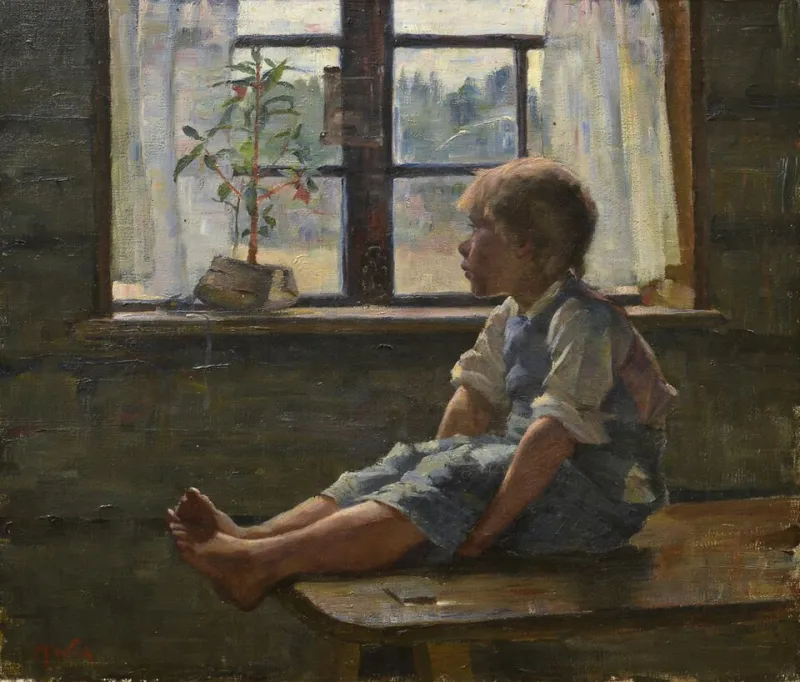
Photo: Shixart1985, CC BY 2.0, via Wikimedia Commons
I used to check my numbers the way some people check the weather — compulsively, first thing in the morning, as if the data might tell me something useful about how the day was going to go. For a while, those numbers were going in the right direction. Then, gradually and then all at once, they weren't.
I won't give you the play-by-play of how it happened, because honestly the mechanics don't matter that much. Algorithm changes, shifting cultural attention, a pivot I made that my existing audience didn't follow me through — it was probably all of those things at once. What matters is the end result: the people who used to show up for my work quietly stopped showing up. And I had to figure out what to do with that.
What the Silence Actually Felt Like
I want to be honest about the grief before I get to the redemption arc, because skipping straight to the lessons would be a lie.
Losing your audience — even a modest one — is genuinely disorienting. It's not just about vanity, though I won't pretend ego isn't involved. It's the loss of a feedback loop you'd come to rely on. Every piece of work I'd been putting out had been shaped, at least in part, by what I knew people responded to. When that response disappears, you lose a reference point. You're suddenly making work in a vacuum, and that vacuum is louder than you'd expect.
There were a few months where I barely made anything. I told myself I was regrouping, recalibrating. Mostly I was just scared.
The Question I Couldn't Avoid
Somewhere around month three of the silence, a question started nagging at me that I really didn't want to answer: Would I still make this if no one ever saw it?
For a lot of the work I'd been doing, the honest answer was no. And that was a rough thing to sit with. It didn't mean the work was bad, exactly — but it meant I'd been making it for the audience more than I'd been making it for any internal creative reason. I'd been producing content. Not work.
There's a difference, and I think most creative people know it even when they don't want to admit it. Content is optimized for reception. Work is made because it needs to exist. The best stuff is usually both — but when you're chasing metrics, you start to tip heavily toward the former.
What Rebuilding Actually Looked Like
I didn't come back with a strategy. I came back because I got bored enough and restless enough that not making things felt worse than the risk of making things nobody would see.
The first few things I put out during that period were strange. Not weird for the sake of weird — just genuinely uncalibrated to any external expectation. I wasn't thinking about shareable moments or what would land with a casual viewer. I was just following the thread of what interested me, which turned out to be different from what I'd been making before.
Some of those things landed with a small group of people who engaged with them more deeply than anything I'd made during my higher-traffic period. Not more broadly — more deeply. That distinction changed how I thought about what success could look like.
The Metrics I Started Measuring Instead
I didn't abandon all measurement — that would be its own kind of self-deception. But I started paying attention to different signals.
Instead of overall reach, I started noticing: Did this work start a real conversation? Not just reactions, but actual back-and-forth. People telling me something I made connected to something specific in their own lives.
Instead of follower counts, I started asking: Are the people finding this work the people it was actually made for? A smaller audience that genuinely gets it is worth more — creatively and honestly even commercially — than a larger audience that's only half-paying attention.
Instead of engagement rates, I started tracking my own creative momentum. Was I excited to make the next thing? Was the work leading somewhere? Those questions turned out to be better predictors of long-term output than any platform metric I'd been fixating on.
The Part I Didn't Expect
Here's the thing nobody warned me about: losing the audience stripped away a kind of performance I hadn't realized I was doing.
When people are watching, you start to develop a stage persona — even in work that feels personal. You make choices not just because they're right for the piece, but because they're right for the impression you're creating. You smooth out the rough edges. You cut the things that might confuse people. You optimize for accessibility.
When the audience left, I stopped performing. And what came out was messier and more honest and more mine than anything I'd made in years.
I'm not romanticizing obscurity. I'd like people to see my work — that's part of why I make it. But there's a version of that desire that's healthy and a version that slowly takes over your creative decision-making in ways you don't notice until you're standing in the rubble of a platform you built for someone else.
Coming Back on Your Own Terms
I'm still rebuilding. I'll probably always be rebuilding in some form — that seems to be the nature of this thing. But the rebuild feels different now because I know what I'm building toward in a way I didn't before.
If your audience has left, or shrunk, or shifted in ways that feel like a loss — I'd gently offer this: let it be a question before you let it be a crisis. Ask yourself what work you'd make if the numbers were never coming back. Whatever that answer is, that's probably the most important creative information you have right now.